


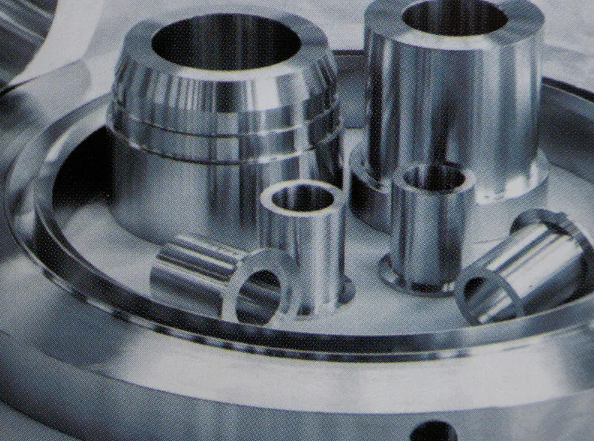
Key Details to Note When Selecting Flanges: A Comprehensive Guide
Flanges are critical components in piping systems, used to connect pipes, valves, pumps, and equipment. Their selection directly impacts system safety, reliability, and long-term performance. Whether in petrochemical plants, power generation facilities, water treatment systems, or general industrial applications, choosing the right flange requires careful consideration of multiple technical parameters. This article provides a systematic overview of the essential details that engineers and procurement professionals must evaluate when selecting flanges for any piping system.
1. Flange Type and Application Suitability
The first and perhaps most fundamental decision is selecting the appropriate flange type for the intended application. Different flange designs offer distinct mechanical advantages and are suited to specific operating conditions.
Weld Neck Flanges (WN) feature a long tapered hub that transitions gradually to the pipe wall thickness, providing excellent stress distribution and fatigue resistance. These flanges are ideal for high-pressure and high-temperature environments, particularly in refineries, power plants, and chemical processing facilities where system integrity is paramount. The tapered hub design minimizes stress concentration at the weld joint, making weld neck flanges the preferred choice for critical service applications.
Slip-On Flanges (SO) are designed to slide over the pipe before being fillet welded both inside and outside. They offer easier alignment and lower cost compared to weld neck flanges, making them suitable for low-to-medium pressure systems. However, their strength is inherently less than that of weld neck flanges, so they should not be specified for high-stress applications.
Socket Weld Flanges (SW) involve inserting the pipe into a socket before fillet welding, making them particularly suitable for small-diameter, high-pressure lines such as hydraulic and steam systems. Their robust connection ensures smooth flow and reliable sealing in demanding environments.
Blind Flanges (BL) have no bore and are used to close pipe ends or isolate systems. They are invaluable during maintenance shutdowns and for future system expansion provisions.
Threaded Flanges (TH) screw directly onto pipes without requiring welding, making them ideal for flammable or explosive environments where hot work is prohibited. However, their application is limited to low-pressure and low-temperature systems due to inherent sealing limitations.
Lap Joint Flanges (LJ) work with stub ends and allow easy alignment and rotation, making them ideal for systems requiring frequent dismantling and maintenance.
2. Pressure and Temperature Ratings
Understanding pressure-temperature ratings is essential for safe flange selection. ANSI/ASME flanges are commonly available in pressure classes 150, 300, 400, 600, 900, 1500, and 2500. These numbers do not represent a single fixed pressure value; instead, they define allowable pressure-temperature limits that vary with material and operating temperature.
For low-pressure systems such as water, HVAC, and fire protection, Class 150 flanges are typically sufficient, with maximum working pressure around 285 psi at ambient temperature. Medium-pressure applications in process piping and refineries often require Class 300 or 600 flanges, while high-pressure systems in oil and gas wellheads demand Class 1500 or 2500 ratings.
It is critical to reference the applicable ASME B16.5 pressure-temperature rating tables for the specific flange material being used. The selected class must safely exceed the system's maximum operating pressure at the highest expected temperature. Choosing a pressure class that is too low can lead to mechanical failure, while overspecifying unnecessarily increases material and fabrication costs.
3. Material Selection and Fluid Compatibility
Material selection is paramount when selecting flanges, as the material must be compatible with the transported fluid and the environmental conditions it will encounter.
Carbon STeel (ASTM A105) is suitable for general applications involving non-corrosive fluids at moderate temperatures. It offers good strength and affordability but requires protection against corrosion in harsh environments.
Stainless Steel (ASTM A182 F304/F316) is ideal for corrosive fluids or high-purity applications. Grade 316 contains molybdenum, providing superior resistance to chloride-induced corrosion compared to 304, making it preferred for chemical processing and marine environments.
Alloy Steel (ASTM A182 F11/F22) is used in high-temperature and high-pressure systems, such as steam lines and refinery service, where creep resistance is essential.
For extremely demanding environments, Duplex and Super Duplex Stainless Steels (ASTM A182 F51/F53/F55) offer both high strength and exceptional corrosion resistance, making them suitable for sour gas service and seawater applications.
For low-temperature service below -29°C, materials such as ASTM A350 LF2 or LF3 with impact resistance properties should be specified to prevent brittle fracture.
4. Flange Face Types and Sealing Surfaces
The flange facing type directly determines the sealing Capability of the connection. Common facing types include:
Raised Face (RF) is the most common flange face type, featuring a small raised ring on the sealing surface. It provides an effective seal and works well across a wide range of applications.
Flat Face (FF) has a flat sealing surface and is typically used with cast iron or other brittle materials where low bolt loads are required to prevent cracking.
Ring-Type Joint (RTJ) features grooves that accommodate metal ring gaskets, creating a tight seal under extreme conditions. RTJ flanges are preferred for high-pressure and high-temperature applications, particularly in oil and gas service.
Tongue and Groove and Male and Female facings provide specialized sealing for applications requiring precise alignment and enhanced leak resistance.
The surface finish of the sealing face is also critical. A smooth, defect-free surface is essential for proper gasket seating and leak prevention. High-quality flanges should have flawless sealing surfaces with exact bolt hole alignment to prevent stress concentration points.
5. Dimensional Standards and Pipe Size Compatibility
Flanges must conform to recognized dimensional standards to ensure compatibility with piping systems. The most widely used standards include:
ASME B16.5 covers flanges up to 24 inches NPS for pressure classes 150 through 2500. This standard specifies dimensions, tolerances, pressure-temperature ratings, and material requirements.
ASME B16.47 applies to larger flanges of 26 inches and above, with Series A and Series B configurations offering different dimensional characteristics.
API 6A governs wellhead and Christmas tree flanges used in oil and gas production, with pressure ratings up to 20,000 psi.
When selecting flanges, engineers must verify that the flange bore size matches the pipe size to avoid flow restrictions or leakage risks. Nominal Pipe Size (NPS) is used in North America, while Diameter Nominal (DN) is used in metric systems.
6. Gasket Selection and Bolt Tightening
The gasket is a critical element in achieving a leak-proof flange connection. Common gasket types include:
Ring-Type Joint (RTJ) gaskets are best for high-pressure applications, providing metal-to-metal sealing.
Spiral Wound gaskets offer excellent performance under thermal cycling and high-pressure conditions, combining metallic winding with soft filler materials.
Flat gaskets made from non-metallic materials are suitable for low-to-medium pressure service with raised face flanges.
Proper bolt tightening is equally essential. Over-tightening can warp the flange surface, while under-tightening leads to insufficient sealing force. Professionals recommend tightening bolts in a crisscross sequence and applying torque in several stages to ensure even load distribution across the sealing face. ASME PCC-1 provides guidelines for bolt tightening sequences and torque values.
7. Installation Considerations and Environmental Factors
Proper installation is critical for flange performance. Surface cleanliness must be ensured before assembly—even tiny contaminants like dust, oil, or rust can compromise sealing performance. Pipe and flange alignment must be precise to avoid excessive mechanical stress that could lead to leakage.
The installation environment also influences flange selection. For systems exposed to vibration or pulsation, threaded flanges should be avoided due to the risk of loosening, and weld neck or socket weld flanges provide superior stability. For outdoor or corrosive environments, protective coatings and corrosion-resistant materials are essential for long-term durability.
8. Cost Considerations and Lifecycle Value
While cost is always a consideration, prioritizing compatibility and safety over initial cost savings is essential for long-term value. Forged flanges are stronger and more durable than cast flanges, making them preferred for high-stress applications, though cast flanges offer more economical options for low-pressure systems.
Investment in high-quality materials and proper flange selection reduces maintenance downtime, minimizes the risk of costly leaks and system failures, and extends the overall lifespan of the piping system.
Selecting the right flange requires balancing multiple technical parameters including flange type, pressure-temperature rating, material compatibility, face type, dimensional standards, gasket selection, and installation requirements. Each factor plays a vital role in ensuring that flange connections are durable, leak-proof, and suitable for the operational conditions they will face. By carefully evaluating these key details against system requirements, engineers can make informed decisions that enhance overall system efficiency, reliability, and safety throughout the entire lifecycle of the piping system. Consulting with experienced engineers and reputable manufacturers can further ensure optimal flange selection, particularly for complex systems or when handling hazardous materials.
Largest manufacturing base for pipe fittings
A World Leading Pipe Fittings Manutacturer
Meeting and exceeding all your expectations

Address: No. 99, Baoying Street,Baoying County, Jiangsu Province, China
Tel: 0086-514-88290587 / 88989086
Mobile : 0086-18932365939
Contact Person:Tony Xu
E-mail: xqh@yz-huayu.com
Products
Butt-welded Fittings Forged Fittings Flanges PipesAbout
Company Profile Plant Area OverviewNews
Company News Industrial NewsContact
Contacts Online MessageKeep In Touch

© 2025 Yangzhou Huayu Pipe Fitting Co.,Ltd. All rights reserved | Powered by Yicheng Network | sitemap
This website uses cookies to ensure you get the best experience on our website.



 Phone
Comment
(0)