


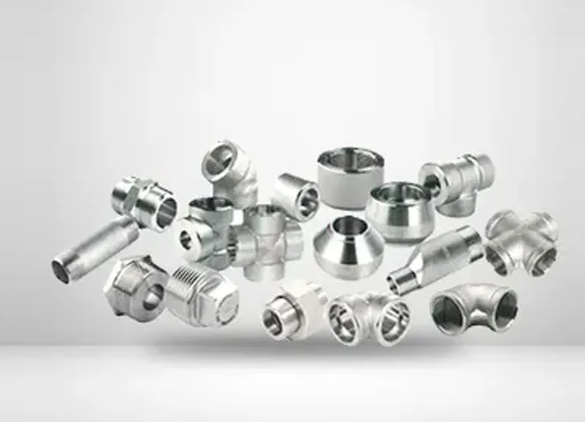
Comprehensive Analysis of Surface Treatment Methods for Forged Fittings: Enhancing Durability, Performance, and Aesthetics
Surface treatment represents a critical phase in the manufacturing lifecycle of forged fittings, serving as the definitive barrier between the component and its operating environment. Forged fittings, whether utilized in high-pressure oil and gas transmission, chemical processing, power generation, or structural applications, are subjected to relentless mechanical stress, thermal cycling, and corrosive agents. The selection of an appropriate surface treatment is not merely a cosmetic afterthought; it is a strategic engineering decision that dictates the component's fatigue life, corrosion resistance, and overall reliability. By modifying the surface chemistry or applying protective layers, manufacturers can significantly extend the service life of the fitting, reduce maintenance costs, and ensure the safety of the entire piping infrastructure.
1. Metallic Coating and Plating Technologies
Metallic coatings are among the most effective methods for protecting forged fittings, particularly those manufactured from carbon sTeel and alloy steel, which are prone to oxidation and environmental degradation.
Galvanizing stands as the industry standard for corrosion protection. This process involves coating the fitting with a layer of zinc, which acts as a sacrificial anode, corroding preferentially to protect the underlying steel. There are two primary methodologies: Hot-dip galvanizing and Electro-galvanizing. In hot-dip galvanizing, the forged fitting is fully immersed in a bath of molten zinc, creating a thick, metallurgically bonded coating that offers exceptional long-term protection against harsh outdoor elements, making it ideal for construction, marine, and agricultural applications. Conversely, electro-galvanizing utilizes an electrochemical process to deposit a much thinner, more uniform layer of zinc. This method is preferred for applications requiring high precision and dimensional stability, as well as for indoor environments where a more refined aesthetic finish is desired.
Electroplating extends beyond zinc to include metals such as nickel and chromium. Chrome plating, for instance, involves the deposition of a chromium layer via electrolysis. This treatment significantly enhances surface hardness, reduces friction, and provides a high-luster, reflective finish that is both aesthetically pleasing and resistant to tarnishing. This is particularly valuable for hydraulic components, valve stems, and piston rods where wear resistance is as critical as rust prevention. Similarly, nickel plating offers excellent resistance to various chemicals and is often used as an undercoat to improve the adhesion of subsequent topcoats or for applications requiring specific magnetic or thermal properties.
2. Chemical Conversion Coatings
Chemical treatments alter the surface chemistry of the forging to create a protective layer that is integral to the metal substrate, often serving as a primer for further finishing.
Phosphating (phosphate conversion coating) is a process that creates a crystalline phosphate layer on the metal surface. This layer provides moderate corrosion resistance on its own but is primarily valued for its ability to improve the adhesion and durability of subsequently applied paints or powder coatings. It is widely used in the automotive and machinery sectors for fittings that will eventually be painted, as it ensures the topcoat remains intact under vibration and thermal stress.
Passivation is a specialized treatment exclusively for stainless steel forged fittings. By immersing the parts in a specific acid solution—typically nitric or citric acid—the process removes free iron particles from the surface and promotes the formation of a robust, invisible oxide layer (chromium oxide). This restores and enhances the natural corrosion resistance of the stainless steel, ensuring the fitting performs reliably in sanitary, marine, or highly corrosive chemical environments.
Pickling is often a prerequisite for other treatments or a treatment in itself. It involves the use of acidic solutions, such as sulfuric or hydrochloric acid, to remove oxide scale, rust, and other impurities formed during the forging or heat treatment processes. A clean, pickled surface is essential for ensuring that subsequent coatings, such as galvanizing or painting, adhere properly without the risk of delamination or blistering.
3. Organic Coatings: Painting and Powder Coating
Organic coatings provide a versatile barrier against moisture and chemicals while offering extensive customization in color and texture.
Painting remains a highly versatile option, with specific formulations tailored to industrial needs. Epoxy paints are renowned for their excellent chemical resistance and strong adhesion to metal surfaces. They are the go-to choice for industrial environments where fittings may be exposed to harsh solvents, alkalis, or acids. Polyurethane paints, on the other hand, offer superior weather resistance and UV stability. They are ideal for outdoor applications where the fittings need to withstand sunlight and weathering without chalking or fading, maintaining their aesthetic appeal over decades. Proper surface preparation, including cleaning and often a primer, is essential to maximize the lifespan of the paint film.
Powder Coating is a dry finishing process that is gaining popularity due to its environmental and performance benefits. It involves applying a fine powder—composed of resin, pigments, and additives—to the surface of the fitting using an electrostatic charge. The coated fitting is then cured in an oven, where the powder melts and flows into a smooth, durable skin. One of the main advantages of powder coating is its environmental friendliness; it contains no solvents and produces negligible volatile organic compounds (VOCs). Furthermore, powder-coated surfaces are generally thicker and more resistant to chipping, scratching, and fading than conventional liquid paints.
4. Mechanical Surface Treatments
Mechanical treatments modify the physical state of the surface to improve durability and prepare it for coatings.
Shot Blasting is a widely used method for cleaning and preparing the surface of forged parts. It involves propelling small metal or ceramic particles at high speeds onto the surface of the fitting. This process effectively removes scale, rust, and sand residues from the forging process. Beyond cleaning, shot blasting creates a controlled rough surface profile that significantly improves the mechanical adhesion of subsequent coatings like paint or powder. Additionally, it can impart compressive residual stresses to the surface, which can enhance fatigue strength.
Polishing is employed to achieve a specific surface finish, ranging from a standard machined look to a high-gloss mirror finish. This is particularly important for decorative fittings or those used in sanitary applications, such as food processing or pharmaceuticals, where a smooth surface is required to prevent bacterial growth and facilitate cleaning.
Shot Peening is a specialized mechanical treatment similar to shot blasting but focused on inducing compressive stress. By bombarding the surface with spherical media, the process creates a layer of compressive stress that counteracts tensile stress, significantly improving the fatigue life of the fitting. This is critical for components subjected to cyclic loading, such as crankshafts, connecting rods, and high-pressure valve components.
5. Advanced and Specialized Treatments
For specific high-performance applications, more advanced treatments are employed to achieve unique surface properties.
Dacromet (Zinc Flake Coating) is a non-electrolytic, water-based coating system that provides exceptional corrosion protection. It consists of overlapping zinc and aluminum flakes suspended in a chromate solution. When baked, it forms a thin, silver-gray coating that offers superior resistance to salt spray and harsh chemicals compared to traditional galvanizing. It is widely used in the automotive industry and for components exposed to the elements, such as solar panel mounting systems and electric push rod joints.
Nitriding (Nitrogen Case Hardening) is a heat treatment process that diffuses nitrogen into the surface of the steel to create a hard, wear-resistant case. Unlike carburizing, nitriding is performed at lower temperatures, which minimizes distortion. The resulting surface hardness can reach 800-1000 HV, making it ideal for gears, molds, and high-wear fittings that require extreme durability without the brittleness associated with some quenching processes.
Anodizing is specifically used for aluminum alloy forged fittings. This electrochemical process thickens the natural oxide layer on the aluminum surface, making it significantly harder and more resistant to corrosion and wear. Anodized surfaces can also be dyed in various colors, providing both protection and aesthetic customization for architectural or consumer-facing applications.
Micro-arc Oxidation (MAO), also known as plasma electrolytic oxidation, is an advanced treatment for light metals like aluminum, magnesium, and titanium. It generates ceramic-like oxide coatings with exceptional hardness and insulation properties. This treatment is particularly valuable for new energy vehicle chassis and aerospace components where lightweight materials must withstand harsh, abrasive environments.
Conclusion: Strategic Selection for Optimal Performance
The selection of a surface treatment for forged fittings is a complex decision matrix involving material type, environmental exposure, mechanical stress, and economic considerations. Carbon steel fittings often rely on galvanizing or organic coatings for basic protection, while stainless steel fittings benefit from passivation to maintain their inherent corrosion resistance. For high-wear applications, nitriding or chrome plating provides the necessary surface hardness, whereas shot peening offers a solution for fatigue-prone components.
Ultimately, the goal of any surface treatment is to ensure that the forged fitting performs its function reliably throughout its intended lifecycle. As environmental regulations tighten and industrial demands increase, the trend is moving toward more sustainable options like powder coating and advanced zinc-flake technologies, which offer high performance with reduced environmental impact. By understanding the distinct advantages of each method—from the sacrificial protection of hot-dip galvanizing to the ceramic-like hardness of micro-arc oxidation—engineers and procurement specialists can make informed decisions that safeguard their infrastructure investments for years to come.
Largest manufacturing base for pipe fittings
A World Leading Pipe Fittings Manutacturer
Meeting and exceeding all your expectations

Address: No. 99, Baoying Street,Baoying County, Jiangsu Province, China
Tel: 0086-514-88290587 / 88989086
Mobile : 0086-18932365939
Contact Person:Tony Xu
E-mail: xqh@yz-huayu.com
Products
Butt-welded Fittings Forged Fittings Flanges PipesAbout
Company Profile Plant Area OverviewNews
Company News Industrial NewsContact
Contacts Online MessageKeep In Touch

© 2025 Yangzhou Huayu Pipe Fitting Co.,Ltd. All rights reserved | Powered by Yicheng Network | sitemap
This website uses cookies to ensure you get the best experience on our website.



 Phone
Comment
(0)