


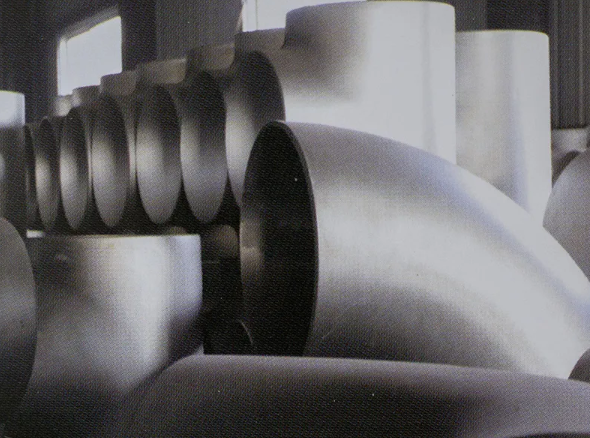
Butt-welded fittings are foundational components in contemporary piping systems, providing a permanent, robust, and leak-proof method of connecting pipes, valves, and other equipment. Unlike threaded or socket-welded alternatives, butt-welded fittings are joined by welding the beveled ends of the fitting directly to the pipe, creating a homogeneous joint that matches the strength of the base material. This unique structural characteristic makes them indispensable across a wide range of industries where reliability, safety, and performance under extreme conditions are paramount. The primary applications of butt-welded fittings span multiple sectors, including oil and gas, power generation, chemical processing, water and wastewater treatment, food and beverage manufacturing, pharmaceuticals, and building services. Each of these industries leverages the distinct advantages of butt-welded fittings to address specific operational challenges and ensure the integrity of their piping networks.
Oil and Gas Industry
The oil and gas industry is one of the most significant consumers of butt-welded fittings, owing to the extreme demands placed on its piping systems. These systems must handle high pressures, corrosive substances, and wide temperature fluctuations, making the integrity of every connection critical. Butt-welded fittings are extensively used in upstream, midstream, and downstream operations, including offshore drilling platforms, refineries, and natural gas processing plants. In upstream applications, such as wellhead connections and flowlines, these fittings provide the necessary strength to withstand the mechanical stresses of high-pressure hydrocarbon transport. In midstream Pipelines, they are employed for transporting crude oil, natural gas, and refined products over long distances, where any leakage could lead to catastrophic environmental and economic consequences. Downstream, in refineries and petrochemical complexes, butt-welded fittings are used in high-temperature cracking units, distillation columns, and heat exchangers, where their ability to maintain structural integrity under thermal cycling and corrosive attack is essential. The smooth internal surface of these fittings also minimizes turbulence and pressure drop, which is crucial for maintaining efficient fluid flow in large-diameter transmission lines.
Power Generation
Power generation facilities, whether fossil fuel-based, nuclear, or renewable, rely heavily on butt-welded fittings for their steam and water circulation systems. In thermal power plants, including coal, gas, and nuclear stations, boiler systems operate at extremely high temperatures and pressures, often exceeding 1,000°F and 1,000 psi. Butt-welded fittings are used in steam lines, feedwater systems, and cooling water circuits to ensure leak-free connections that can withstand the constant thermal expansion and contraction inherent in power generation cycles. The homogeneous nature of the welded joint eliminates potential weak points that could fail under cyclic loading, thereby enhancing the overall safety and reliability of the plant. In nuclear facilities, where the consequences of pipe failure are particularly severe, butt-welded fittings are preferred for critical systems such as reactor coolant loops and emergency core cooling systems, as they provide a permanent, inspectable connection that meets stringent regulatory standards. Additionally, in renewable energy applications such as concentrated solar power plants, these fittings are used in high-temperature heat transfer fluid circuits, where their resistance to thermal fatigue is invaluable.
Chemical and Petrochemical Processing
The chemical and petrochemical industries involve the handling of highly corrosive, toxic, and flammable substances, often at elevated temperatures and pressures. Butt-welded fittings, particularly those made from corrosion-resistant alloys such as stainless sTeel and duplex steel, are ideally suited for these demanding environments. They are used in reactors, distillation columns, heat exchangers, and fluid transfer systems, where the prevention of leaks is critical to worker safety and environmental protection. The resistance of these fittings to chemical attack, combined with their ability to maintain structural integrity under high stresses, makes them a standard choice for handling acids, solvents, and reactive intermediates. In petrochemical plants, butt-welded fittings are employed in ethylene crackers, polymer reactors, and aromatics units, where the combination of high temperature and corrosive by-products requires materials that can endure without degradation. The seamless internal surface of the welded joint also reduces the risk of product contamination and facilitates cleaning, which is particularly important in batch processing operations.
Water and Wastewater Treatment
Water and wastewater treatment facilities require reliable piping systems to transport water, sewage, and treatment chemicals while preventing contamination and leakage. Butt-welded fittings are widely used in these applications due to their durability, corrosion resistance, and ability to form permanent, leak-proof joints. In drinking water treatment plants, these fittings are employed in raw water intake lines, filtration systems, and distribution networks, where their smooth internal surfaces minimize the risk of bacterial growth and ensure water quality. In wastewater treatment, they are used in sludge handling systems, chemical dosing lines, and effluent discharge pipes, where exposure to corrosive agents and abrasive solids necessitates robust construction. The ability of butt-welded fittings to withstand the environmental conditions found in treatment plants, including moisture, chemical exposure, and temperature variations, ensures long-term service life and reduced maintenance requirements. Moreover, the welding process creates a joint that is fully sealed, preventing the ingress of groundwater or contaminants that could compromise treatment processes.
Food and Beverage Manufacturing
The food and beverage industry demands piping systems that meet stringent hygiene standards to prevent product contamination and ensure consumer safety. Butt-welded fittings, typically made from stainless steel grades such as 304 or 316L, are extensively used in this sector due to their smooth, non-porous surfaces that are easy to clean and sanitize. These fittings are found in dairy processing plants, breweries, soft drink bottling facilities, and food processing lines, where they transport liquids such as milk, beer, juices, and edible oils. The absence of crevices or gaps in the welded joint eliminates potential breeding grounds for bacteria, while the corrosion resistance of stainless steel ensures that no metal ions leach into the product. Butt-welded fittings are also preferred for clean-in-place systems, where they must withstand repeated exposure to hot caustic and acidic cleaning solutions without degrading. Their ability to maintain a sterile environment throughout the production process is critical for meeting regulatory requirements and protecting brand reputation.
Pharmaceutical Industry
Pharmaceutical manufacturing requires the highest levels of cleanliness and quality control, as even minor contamination can compromise the safety and efficacy of drugs. Butt-welded fittings are essential in this industry for constructing piping systems that transport raw materials, active pharmaceutical ingredients, solvents, and purified water. The use of stainless steel butt-welded fittings ensures that the internal surfaces of the piping are free from irregularities where contaminants could accumulate. In critical applications such as water-for-injection systems and bioprocessing reactors, these fittings provide leak-proof connections that maintain the integrity of sterile environments. The ability to validate the weld quality through non-destructive testing methods, such as radiographic inspection, further enhances confidence in the system’s reliability. Additionally, the smooth internal finish of butt-welded fittings facilitates efficient cleaning and sterilization, reducing downtime and ensuring compliance with Good Manufacturing Practices.
Building Services and HVAC Systems
Butt-welded fittings also find extensive application in building services, particularly in large commercial and industrial facilities that require complex piping networks for heating, ventilation, and air conditioning. In HVAC systems, these fittings are used for chilled water lines, hot water heating circuits, and steam distribution systems, where their ability to provide tight, leak-free connections is essential for maintaining energy efficiency and preventing water damage. The high strength of butt-welded joints allows them to withstand the pressure fluctuations and thermal expansion common in building systems, ensuring long-term reliability. In large-scale projects such as hospitals, airports, and data centers, where uninterrupted operation is critical, the durability of these fittings reduces the need for maintenance and minimizes the risk of system failures. Their use in high-pressure steam systems for heating and humidification further underscores their versatility in building applications.
In summary, butt-welded fittings are integral to the safe and efficient operation of piping systems across a diverse range of industries. Their primary applications in oil and gas, power generation, chemical processing, water treatment, food and beverage, pharmaceuticals, and building services are driven by the need for robust, leak-proof, and durable connections that can withstand extreme conditions. The homogeneous joint structure, smooth internal surface, and material versatility of these fittings make them the preferred choice for critical applications where reliability is non-negotiable. As industrial processes continue to evolve and demand higher performance standards, the role of butt-welded fittings in ensuring system integrity and operational efficiency will remain essential.
Largest manufacturing base for pipe fittings
A World Leading Pipe Fittings Manutacturer
Meeting and exceeding all your expectations

Address: No. 99, Baoying Street,Baoying County, Jiangsu Province, China
Tel: 0086-514-88290587 / 88989086
Mobile : 0086-18932365939
Contact Person:Tony Xu
E-mail: xqh@yz-huayu.com
Products
Butt-welded Fittings Forged Fittings Flanges PipesAbout
Company Profile Plant Area OverviewNews
Company News Industrial NewsContact
Contacts Online MessageKeep In Touch

© 2025 Yangzhou Huayu Pipe Fitting Co.,Ltd. All rights reserved | Powered by Yicheng Network | sitemap
This website uses cookies to ensure you get the best experience on our website.



 Phone
Comment
(0)