


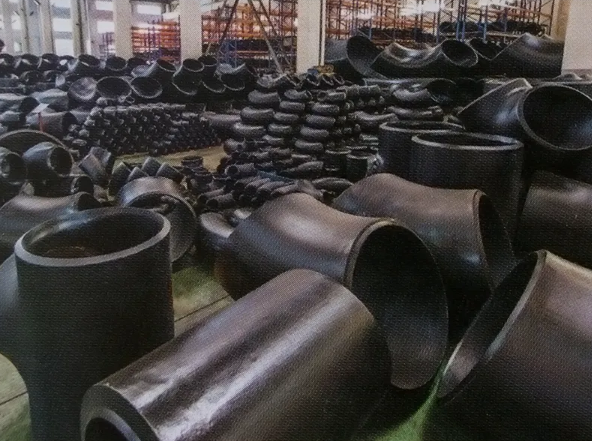
Butt-welded fittings are essential components in piping systems, used to connect pipes and change direction, diameter, or flow path. They are widely applied in industries such as oil and gas, petrochemical, power generation, and water treatment. The integrity and safety of the entire piping system depend heavily on the proper installation and use of these fittings. However, the high-temperature, high-pressure, and often hazardous nature of the fluids transported through these systems demands strict adherence to a series of precautions. This article outlines the critical precautions that must be observed when using butt-welded fittings to ensure system reliability, safety, and longevity.
1. Material Selection and Verification
The first and most fundamental precaution is ensuring that the material of the butt-welded fitting is compatible with the pipe material and the service conditions. The material must be selected based on the operating temperature, pressure, and the chemical properties of the fluid being transported. Common materials include carbon sTeel, stainless steel, alloy steel, and special alloys for corrosive environments.
Before installation, it is essential to verify the material specifications, including the grade, heat number, and chemical composition. This information should be cross-checked against the project's material requisition and the applicable standards, such as ASTM or ASME specifications. Using a fitting made from the wrong material can lead to accelerated corrosion, stress corrosion cracking, or mechanical failure under operating conditions. The material certificate should be reviewed and retained for quality assurance and traceability purposes.
2. Proper Handling and Storage
Butt-welded fittings are precision components that can be damaged by improper handling and storage. Fittings should be stored in a clean, dry environment, protected from moisture, dirt, and corrosive elements. They should be kept off the ground, preferably on pallets or racks, to prevent contact with water or contaminants.
During handling, care must be taken to avoid dropping or striking the fittings, which can cause dents, scratches, or deformation. Damaged fittings, even with minor surface defects, should not be used, as these imperfections can serve as stress concentration points during welding and service. The ends of the fittings, which are beveled for welding, require particular protection to preserve their geometry and surface finish. End Caps or plastic plugs should be kept in place until just before welding to prevent the ingress of foreign materials.
3. Preparation of Weld Joints
Proper preparation of the weld joint is critical for achieving a sound weld. The beveled ends of the butt-welded fittings must be clean and free from any contaminants, including oil, grease, paint, rust, scale, and moisture. These contaminants can cause porosity, slag inclusions, and other weld defects that compromise the integrity of the joint.
The bevel angle, root face, and root gap must conform to the requirements of the applicable welding procedure specification. The internal and external surfaces of the fitting and the pipe adjacent to the weld area should be cleaned to a bright metal finish. Any surface irregularities, such as burrs or sharp edges, should be removed by grinding or filing. The fit-up of the joint, including the alignment and gap between the fitting and the pipe, must be precise to ensure uniform weld penetration and avoid stress concentrations.
4. Welding Procedure Qualification
Welding on butt-welded fittings must be performed in accordance with a qualified welding procedure specification. This specification details the essential variables for the weld, including the welding process, filler metal type and size, preheat and interpass temperatures, post-weld heat treatment requirements, welding parameters, and joint design. The welding procedure must be qualified through testing to demonstrate that it produces welds with the required mechanical properties and soundness.
It is essential to ensure that the welding procedure specification is applicable to the specific material grade, thickness, and joint configuration of the fitting being installed. Welding should only be carried out by welders who are qualified and certified to perform the specific welding procedure. The welder's qualification should be current and valid for the material, process, and position involved.
5. Preheating and Interpass Temperature Control
Preheating is often required for butt-welding of certain materials, particularly thick sections of carbon steel, alloy steel, and stainless steel. The purpose of preheating is to reduce the cooling rate of the weld and the heat-affected zone, which helps to prevent the formation of hard, brittle microstructures that are susceptible to hydrogen-induced cracking. The preheat temperature and interpass temperature must be maintained within the range specified in the welding procedure specification.
Temperature measurement should be performed using reliable methods, such as contact thermocouples or infrared pyrometers, and the readings should be recorded. Inadequate preheating or failure to maintain the interpass temperature can result in weld cracking, reduced ductility, and increased hardness. Conversely, excessive interpass temperatures can lead to reduced mechanical properties and increased distortion.
6. Post-Weld Heat Treatment
Post-weld heat treatment is a critical step for many butt-welded fittings, especially those made from carbon steel with thick walls, alloy steel, and certain grades of stainless steel. The purpose of post-weld heat treatment is to relieve residual stresses, reduce hardness, improve ductility, and stabilize the microstructure. The specific post-weld heat treatment requirements, including temperature, heating rate, soaking time, and cooling rate, must be followed precisely as specified in the welding procedure specification.
Failure to perform proper post-weld heat treatment can lead to stress corrosion cracking, brittle fracture, or dimensional instability. The post-weld heat treatment process should be carefully controlled and monitored, and the temperature and time records should be maintained for quality assurance.
7. Inspection and Non-Destructive Testing
After welding, the weld joints of butt-welded fittings must be inspected to verify their quality and integrity. Visual inspection is the first step to check for surface defects, such as cracks, porosity, undercut, and incomplete fusion. The weld profile should be smooth and properly contoured, with no excessive reinforcement or concavity.
Non-destructive testing methods are used to detect internal defects that are not visible on the surface. Common non-destructive testing methods for butt-welded joints include radiographic testing, ultrasonic testing, magnetic particle testing, and liquid penetrant testing. The choice of non-destructive testing method and the acceptance criteria should be based on the applicable code, standard, and the criticality of the service. The non-destructive testing results should be documented and reviewed by qualified personnel.
8. Dimensional Verification
The dimensional accuracy of butt-welded fittings is important for proper fit-up and alignment in the piping system. Before installation, the key dimensions of the fitting, including the outside diameter, wall thickness, end-to-end length, and bevel geometry, should be verified against the project specifications. Dimensional deviations can cause misalignment, excessive stress, and difficulty in welding.
After welding, the dimensional stability of the fitting should be checked. Distortion caused by welding heat can affect the alignment and fit of the piping system. If significant distortion is observed, corrective measures, such as mechanical straightening or re-welding, may be required, subject to the approval of the engineering authority.
9. Avoidance of Excessive Force
During installation, excessive force should not be applied to butt-welded fittings. Forcing misaligned pipes or fittings into alignment can introduce high residual stresses, which can lead to failure during service. Proper alignment and fit-up should be achieved through careful measurement, cutting, and adjustment, rather than through the application of force.
When tightening bolts on Flanged connections adjacent to butt-welded fittings, the bolts should be tightened in a cross-pattern sequence to the specified torque. Uneven or excessive tightening can distort the fitting and cause leaks or stress concentrations.
10. Considerations for Special Environments
When butt-welded fittings are used in special environments, such as high-temperature services, cryogenic applications, or corrosive environments, additional precautions are necessary. For high-temperature services, the material must have adequate creep strength and oxidation resistance. For cryogenic applications, the material must have sufficient toughness at low temperatures to prevent brittle fracture. For corrosive environments, the material must be compatible with the corrosive media, and precautions should be taken to prevent corrosion during storage and installation.
The successful use of butt-welded fittings requires careful attention to a comprehensive set of precautions, from material selection and handling to welding, inspection, and dimensional verification. Each step in the process is critical to ensuring the integrity, safety, and longevity of the piping system. By adhering to established standards, qualified procedures, and best practices, engineers and technicians can minimize the risk of failures and ensure reliable operation in demanding industrial applications. The precautions outlined in this article serve as a guide for the proper use of butt-welded fittings, contributing to the overall safety and efficiency of piping systems.
Largest manufacturing base for pipe fittings
A World Leading Pipe Fittings Manutacturer
Meeting and exceeding all your expectations

Address: No. 99, Baoying Street,Baoying County, Jiangsu Province, China
Tel: 0086-514-88290587 / 88989086
Mobile : 0086-18932365939
Contact Person:Tony Xu
E-mail: xqh@yz-huayu.com
Products
Butt-welded Fittings Forged Fittings Flanges PipesAbout
Company Profile Plant Area OverviewNews
Company News Industrial NewsContact
Contacts Online MessageKeep In Touch

© 2025 Yangzhou Huayu Pipe Fitting Co.,Ltd. All rights reserved | Powered by Yicheng Network | sitemap
This website uses cookies to ensure you get the best experience on our website.



 Phone
Comment
(0)