


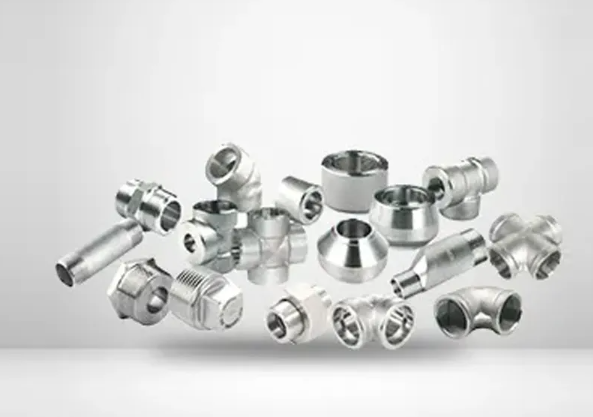
In the world of industrial piping systems, the choice between forged and cast fittings is a decision that has profound implications for system safety, longevity, and overall performance. While both manufacturing methods produce components that serve the same fundamental purpose—connecting, redirecting, or terminating pipe runs—the underlying material properties and structural integrity of the finished products differ dramatically. Forged Fittings, produced through a process of mechanical deformation under high compressive force, consistently outperform their cast counterparts in nearly every critical performance metric. This article explores the comprehensive advantages of forged fittings over cast fittings, examining the metallurgical, mechanical, and practical benefits that make them the preferred choice for demanding applications.
Metallurgical Superiority Through Grain Structure
The most fundamental advantage of forged fittings lies in the transformation of the metal's internal grain structure during the manufacturing process. When a fitting is forged, the metal is heated to a malleable state—but crucially, not molten—and then shaped under high compressive force using hydraulic presses or hammer dies. This pressure causes grain recrystallization, breaking down the original coarse dendritic structure and replacing it with fine, equiaxed grains that are aligned to the shape of the fitting. The resulting grain flow follows the contour of the finished component, creating a continuous, dense microstructure that is free of internal voids.
In contrast, casting involves pouring molten metal into a mold and allowing it to solidify. This process inherently introduces risks such as shrinkage cavities, gas porosity, cold shuts, and slag inclusions that form as the metal contracts during cooling. These internal defects are not always visible during inspection but significantly reduce the load-bearing cross-section of the fitting and create initiation points for fatigue cracks under cyclic pressure. The casting process results in a random grain orientation that can generate weak areas where stress concentrations cause premature failure.
Superior Mechanical Properties
The refined grain structure achieved through forging translates directly into measurable improvements in mechanical properties. Studies comparing forged and cast sTeel of the same grade have demonstrated that forged fittings carry 26 percent higher tensile strength and deliver 37 percent higher fatigue strength than cast equivalents. Under tensile failure conditions, forged steel shows a 58 percent reduction in cross-sectional area compared to only 6 percent for cast iron, indicating far greater ductility before rupture. This difference is critical in applications where fittings must withstand deformation without catastrophic failure.
A forged carbon steel Elbow, for example, will typically exhibit 20 to 30 percent higher impact toughness than a cast elbow of identical composition and dimensions. The superior impact resistance of forged fittings stems from their aligned, continuous grain structure, which allows them to absorb impact loads without fracturing. Cast fittings, by contrast, crack more readily under sudden shock loading—a property that becomes particularly dangerous in systems with water hammer, pressure surges, or thermal shock.
Elimination of Internal Defects
One of the most significant advantages of forged fittings is the near-total elimination of internal defects that plague cast components. Porosity—internal gas pockets formed during solidification—is inherent to the casting process, and larger cast sections carry a higher probability of such defects. While radiographic or ultrasonic inspection can detect most voids, subtle microporosity often esCapes standard testing and reduces the actual pressure capacity of the fitting below its rated values.
The forging process, by contrast, mechanically closes voids, compacts segregated zones, and welds microscopic discontinuities through hydrostatic pressure. Porosity, shrinkage, and cold pour defects are structurally excluded from the finished component—not merely inspected out. This distinction is most critical in high-pressure systems where defect-initiated cracks can propagate rapidly, leading to sudden and catastrophic failure. The density of the forged microstructure also provides superior resistance to wear and corrosion, as the reduced porosity lowers the likelihood of localized corrosion initiation.
Enhanced Corrosion Resistance and Longevity
While both forged and cast fittings can be manufactured from corrosion-resistant materials, forged components consistently perform better in harsh environments. The reduced porosity of forged fittings decreases the surface area available for corrosive attack and eliminates the internal pathways through which corrosive media can penetrate the material. This advantage is particularly important in chloride-rich environments or acidic media applications, where localized corrosion can rapidly compromise the integrity of cast components.
Field investigations in chemical processing facilities have demonstrated that forged stainless steel fittings last longer than cast ones when exposed to temperature cycling and corrosive environments. The superior corrosion resistance of forged fittings translates directly into longer service life and reduced maintenance requirements, offering significant economic advantages over the full lifecycle of a piping system.
Superior Performance Under Extreme Conditions
Forged fittings excel in applications involving high pressure, high temperature, cyclic loading, and thermal shock. The forging process aligns the metal grain boundaries with the stress patterns of the component, optimizing load distribution and enhancing the fitting's ability to withstand extreme operating conditions. In high-pressure systems, forged fittings can maintain their sealing integrity and structural strength under conditions that would cause cast fittings to fail.
The enhanced fatigue resistance of forged fittings is particularly valuable in systems subject to cyclic pressure, vibration, or thermal expansion and contraction. The continuous grain structure and absence of internal defects mean that forged fittings can endure millions of pressure cycles without developing cracks, while cast fittings may fail after only thousands of cycles under similar conditions. This performance advantage is critical in applications such as oil and gas transfer, chemical processing, power generation, and marine systems, where component failure poses serious safety and financial hazards.
Reliability and Consistency
The manufacturing process for forged fittings inherently produces more consistent and reliable components than casting. The mechanical deformation involved in forging subjects the material to intense scrutiny during production—billets containing significant defects are likely to break up during the forging process itself, providing an inherent quality check that does not exist in casting. This means that by the time a forged fitting reaches the finished stage, it has already demonstrated its structural integrity.
Forged fittings also offer superior traceability and quality assurance. The production process typically follows strict international standards such as ASME B16.11, which defines dimensional requirements, pressure-temperature ratings, and marking requirements for socket welding and threaded forged fittings. Material specifications fall under separate ASTM or ASME standards depending on the alloy, ensuring that every component meets defined performance criteria. The ability to easily test material throughout the production process and prior to spending time and money on machining is a distinct advantage that forgings have over castings.
Economic Considerations
While cast fittings typically cost less per unit at the point of purchase, this initial cost advantage often proves illusory when the full lifecycle costs are considered. Cast fittings specified in pressure-cyclic service tend to fail sooner, and when failure occurs in a critical line, the total cost—including emergency shutdown, replacement labor, production loss, and inspection—typically exceeds the original fitting cost by a factor of five to ten.
Forged fittings, by contrast, offer superior long-term value. Their enhanced durability and reliability reduce the frequency of replacement cycles across a system's lifetime, and their resistance to failure minimizes the risk of costly production interruptions and safety incidents. The ability to conduct in-service wall thickness measurements using ultrasonic techniques further reduces maintenance costs, as corrosion can be monitored without removing components from service. For applications where safety and reliability are paramount, the additional initial investment in forged fittings is justified by the peace of mind and operational security they provide.
The advantages of forged fittings over cast fittings are comprehensive and well-documented. From their superior metallurgical structure and enhanced mechanical properties to their elimination of internal defects and exceptional performance under extreme conditions, forged fittings represent the gold standard for critical piping applications. While cast fittings may be acceptable for low-pressure, non-critical systems where cost is the primary consideration, the demands of modern industrial operations—particularly in oil and gas, petrochemical, power generation, and chemical processing—require the reliability and performance that only forged fittings can provide. The choice between forged and cast fittings is ultimately a choice between short-term cost savings and long-term system integrity, between components that may fail unexpectedly and those engineered to endure. For engineers and procurement professionals tasked with ensuring the safety and reliability of industrial piping systems, the advantages of forged fittings make them the clear and responsible choice.
Largest manufacturing base for pipe fittings
A World Leading Pipe Fittings Manutacturer
Meeting and exceeding all your expectations

Address: No. 99, Baoying Street,Baoying County, Jiangsu Province, China
Tel: 0086-514-88290587 / 88989086
Mobile : 0086-18932365939
Contact Person:Tony Xu
E-mail: xqh@yz-huayu.com
Products
Butt-welded Fittings Forged Fittings Flanges PipesAbout
Company Profile Plant Area OverviewNews
Company News Industrial NewsContact
Contacts Online MessageKeep In Touch

© 2025 Yangzhou Huayu Pipe Fitting Co.,Ltd. All rights reserved | Powered by Yicheng Network | sitemap
This website uses cookies to ensure you get the best experience on our website.



 Phone
Comment
(0)