


Introduction
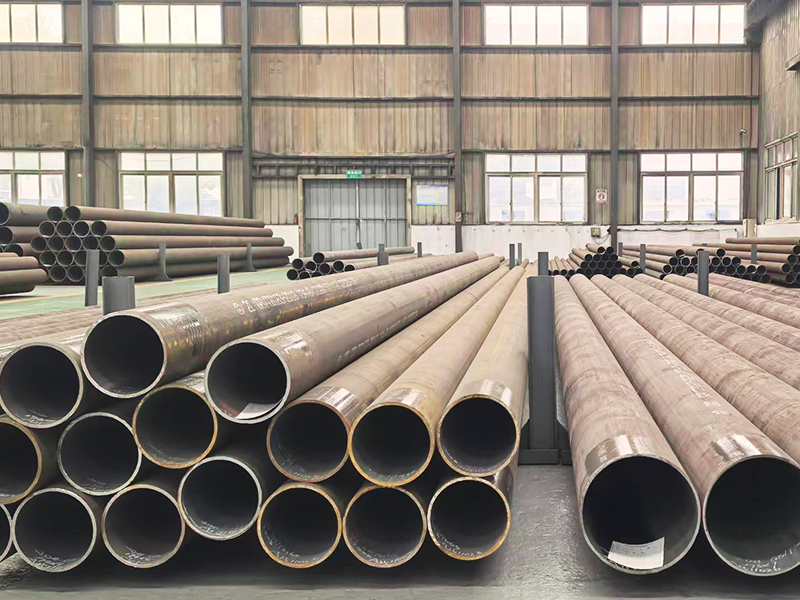
In modern industrial fluid transport systems, energy efficiency has become a paramount concern. Among the various factors influencing system performance, the internal surface characteristics of pipes play a critical role in determining flow resistance and associated energy consumption. Pipes with smooth inner surfaces have emerged as a key technological solution for reducing frictional pressure drop and optimizing energy usage across diverse applications ranging from water supply to chemical processing and pneumatic systems. This article explores the fundamental principles, material considerations, and engineering implications of smooth-bore piping technology.
The Fluid Dynamics of Surface Roughness
From a fluid mechanics perspective, the interaction between a moving fluid and the pipe wall generates frictional resistance that directly impacts energy consumption. The roughness of the inner surface determines the magnitude of this frictional drag. When fluid flows through a pipe, microscopic irregularities on the wall surface create turbulence in the boundary layer, the thin region where fluid velocity transitions from zero at the wall to the free-stream velocity in the core. This turbulence increases energy dissipation, requiring pumps or compressors to work harder to maintain desired flow rates.
The Darcy-Weisbach equation, a fundamental principle in pipe flow analysis, quantifies the relationship between surface roughness and pressure loss. The friction factor, a key parameter in this equation, increases significantly with surface roughness. Research has demonstrated that for every 10% increase in pipe wall roughness, the pressure drop may rise by as much as 20%. This nonlinear relationship underscores the importance of maintaining smooth internal surfaces in energy-conscious system design.
Smooth pipes minimize the formation of turbulent eddies near the wall, allowing fluid to flow more efficiently in laminar or transitional regimes. In continuous-transfer systems, even modest reductions in friction translate into substantial performance gains over extended operational periods. The smooth surface also reduces the energy required to overcome viscous shear forces, directly lowering the power demand on pumping equipment.
Material Solutions for Enhanced Surface Smoothness
Different materials offer varying degrees of intrinsic surface smoothness, and modern manufacturing techniques have further enhanced these characteristics. Aluminum alloy pipes, for instance, can achieve ultra-smooth internal surfaces through anodizing or epoxy coating processes, with friction coefficients reduced to below 0.5 micrometers. This level of finish is particularly advantageous in applications requiring high cleanliness and low pressure loss.
Polypropylene tubes represent another significant advancement in smooth-bore piping technology. As a polyolefin material, polypropylene is extruded with a uniform, non-porous inner surface that inherently limits turbulence at the fluid-wall interface. Unlike many metal pipes, polypropylene maintains its smoothness over time because it resists scale buildup and corrosion that can degrade surface quality. This characteristic makes it especially suitable for long, straight Pipeline runs commonly found in industrial plants.
Stainless sTeel pipes, particularly those manufactured through cold drawing and bright annealing processes, can achieve exceptional surface finishes with roughness values below 0.45 micrometers. These pipes combine the mechanical strength of metal with surface qualities approaching those of plastic materials. The manufacturing process involves precise cold rolling followed by heat treatment in a controlled atmosphere, which eliminates surface imperfections and optimizes the material's microstructure.
Copper pipes offer yet another perspective on smoothness and energy efficiency. Newly installed copper pipes have an internal roughness of only 0.0015 millimeters, a remarkably smooth surface that significantly reduces frictional drag. Copper's natural resistance to corrosion helps maintain this smoothness over decades of service, unlike carbon steel pipes that may experience a near doubling of surface roughness after five years due to rust formation.
The Mechanism of Drag Reduction
The fundamental mechanism by which smooth inner surfaces reduce flow resistance involves minimizing the interaction between the fluid and the pipe wall at the microscopic level. In rough pipes, surface irregularities create localized flow separation and reattachment, generating additional pressure losses that compound along the pipe length. Smooth surfaces eliminate these energy-dissipating phenomena, allowing fluid to flow with minimal disturbance.
Advanced surface engineering has produced even more sophisticated approaches to drag reduction. Slippery liquid-infused surfaces, inspired by natural phenomena, represent a cutting-edge development in this field. By applying a polystyrene coating infused with a lubricant to the inner surface of aluminum pipes, researchers have achieved approximately 33% drag reduction under turbulent flow conditions. This approach creates a stable liquid-liquid interface that remains effective even under high shear stress, offering superior performance compared to traditional superhydrophobic surfaces that rely on trapped air layers.
The smoothness of a coating layer plays a significant role in drag reduction, which can be achieved by minimizing surface irregularities combined with regulating coating thickness. Identifying the optimal coating thickness is essential to ensure sufficient smoothness of the coated surface. These advanced coatings also exhibit anticorrosion and antifouling properties, indicating their potential for long-term operation in fluid transport pipelines.
Long-Term Performance and System Integration
The benefits of smooth inner surface pipes extend beyond immediate energy savings to include long-term system reliability and reduced maintenance requirements. Smooth surfaces resist the accumulation of deposits, scale, and contaminants that can degrade system performance over time. In rough pipes, surface irregularities act as traps for particles and chemical residues, accelerating corrosion and scaling processes that further increase roughness and energy consumption.
In Clean-in-Place and process fluid systems, smooth inner walls reduce residue adhesion, making cleaning more effective and repeatable. This characteristic is particularly valuable in industries such as food, beverage, and pharmaceuticals, where hygiene goals must be balanced with hydraulic efficiency. Better cleaning with lower pressure requirements improves both safety and productivity.
The corrosion resistance of certain smooth-bore materials also contributes to long-term energy efficiency. Aluminum alloy pipes, for example, offer superior resistance to alkaline and acid corrosion compared to stainless steel, preventing the inner wall roughening and thickness reduction that plague traditional carbon steel systems. While carbon steel pipes may require frequent replacement due to rust-related degradation, aluminum and other corrosion-resistant materials can maintain their smooth surfaces for extended periods with minimal maintenance.
Environmental and Economic Implications
From a broader perspective, the adoption of smooth inner surface pipes supports sustainability goals by reducing energy consumption across the entire lifecycle of fluid transport systems. Reduced pumping power requirements directly lower operational costs and carbon emissions. The improved flow characteristics also allow engineers to design systems with smaller pipe diameters or simpler layouts without sacrificing performance, reducing material requirements and installation costs.
The environmental benefits are compounded by the durability of smooth pipes. Materials such as copper can last for more than 50 years in well-designed systems, dramatically reducing the indirect energy consumption associated with manufacturing, transportation, and installation of replacement pipes. Polypropylene pipes, while having different service characteristics, also offer extended service life with stable performance.
Furthermore, the 100% recyclability of many smooth-bore materials, such as copper and aluminum, contributes to circular economy principles. Recycled copper requires only 15-20% of the energy needed for primary production, significantly reducing the energy footprint over the material's lifecycle.
Smooth inner surface pipes represent a fundamental advancement in fluid transport technology, offering quantifiable reductions in flow resistance and energy consumption across diverse applications. The underlying principle is rooted in fluid dynamics: minimizing surface roughness reduces frictional drag, turbulence, and the associated pressure losses that drive pumping energy requirements. Modern materials, including aluminum alloys, polypropylene, stainless steel, and copper, each offer distinct advantages in achieving and maintaining smooth surfaces over extended service periods.
Advanced surface treatments, such as lubricant-infused coatings, further enhance drag reduction Capabilities, while corrosion-resistant materials ensure that initial smoothness is preserved throughout the system's operational life. The cumulative benefits of reduced energy consumption, lower maintenance requirements, and extended service life make smooth-bore piping an essential consideration for engineers and system designers seeking to optimize both economic and environmental performance.
As global focus on energy efficiency intensifies, the role of pipe surface quality in overall system performance will continue to gain recognition. Choosing smoother pipes at the design stage delivers benefits that persist throughout the entire lifecycle of the system, representing a prudent investment in both operational excellence and environmental stewardship.
Largest manufacturing base for pipe fittings
A World Leading Pipe Fittings Manutacturer
Meeting and exceeding all your expectations

Address: No. 99, Baoying Street,Baoying County, Jiangsu Province, China
Tel: 0086-514-88290587 / 88989086
Mobile : 0086-18932365939
Contact Person:Tony Xu
E-mail: xqh@yz-huayu.com
Products
Butt-welded Fittings Forged Fittings Flanges PipesAbout
Company Profile Plant Area OverviewNews
Company News Industrial NewsContact
Contacts Online MessageKeep In Touch

© 2025 Yangzhou Huayu Pipe Fitting Co.,Ltd. All rights reserved | Powered by Yicheng Network | sitemap
This website uses cookies to ensure you get the best experience on our website.



 Phone
Comment
(0)