


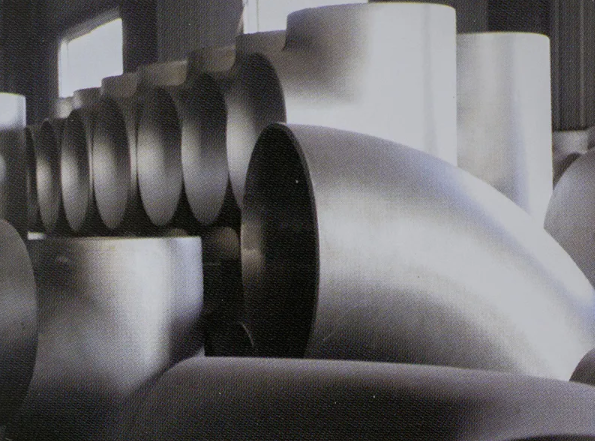
Selecting the right butt-welded fitting for high-pressure applications is a critical engineering decision that directly impacts the safety, reliability, and longevity of the entire piping system. In industries such as oil and gas, petrochemicals, power generation, and chemical processing, piping systems often operate under extreme pressures and temperatures, where a single component failure can lead to catastrophic consequences. The selection process involves a systematic evaluation of multiple factors, including material grade, pressure-temperature ratings, dimensional standards, wall thickness, and geometric configuration. This article provides a comprehensive guide to understanding the key considerations and technical principles behind the selection of butt-welded fittings for high-pressure use.
1. Understanding the Pressure Requirements
The first and most fundamental step in selecting a butt-welded fitting for high-pressure use is to accurately determine the operating pressure of the system. This includes not only the normal operating pressure but also the maximum allowable working pressure and potential pressure surges that may occur during startup, shutdown, or upset conditions. The fitting must be Capable of safely containing the process fluid under all anticipated operating scenarios.
Under the ASME B16.9 standard, butt-weld fittings do not have independent pressure ratings like Class 150 or 3000. Instead, their pressure-bearing capacity is directly tied to the wall thickness of the pipe they connect to. This means that the schedule of the fitting must exactly match the seamless sTeel pipe's schedule to ensure a smooth inner diameter and eliminate flow restrictions and stress concentration at the weld joint. For high-pressure applications, common schedules include Sch 40, Sch 80, Sch 160, and XXS (double extra strong).
It is essential to select fittings with a pressure rating higher than the system's maximum operating pressure to accommodate unexpected pressure surges and provide an adequate safety margin. The selection must also comply with applicable piping codes, such as ASME B31.3 for Process Piping or ASME B31.1 for Power Piping, which provide stress calculations and guidelines for high-pressure systems.
2. Material Selection Based on Service Conditions
Material selection is the most critical factor in ensuring the performance of butt-welded fittings under high-pressure conditions. The chemical properties of the fluid or gas flowing through the Pipeline dictate the fitting's material grade, and choosing the wrong grade can lead to catastrophic corrosion or contamination.
For high-pressure applications involving water, non-corrosive fluids, and general industrial pipelines, carbon steel grades such as ASTM A234 WPB are the most widely used choice. This material offers excellent weldability and mechanical strength, making it suitable for power plants and thermal insulation piping. For applications involving corrosive chemicals, acids, or anti-corrosion systems, stainless steel is mandatory. ASTM A403 WP304 is the standard choice for general anti-corrosion applications, while ASTM A403 WP316L is required for highly corrosive environments, such as coastal power plants or aggressive chemical media. The "L" in 316L stands for Low Carbon, which eliminates the risk of intermolecular corrosion during welding.
For extremely high-temperature and high-pressure environments, such as those found in refineries, boilers, and heat exchangers, alloy steel fittings provide excellent performance. Materials containing chromium, molybdenum, or vanadium offer enhanced strength, heat resistance, and durability. In the most demanding conditions involving sour gas handling or high-chloride environments, duplex stainless steels offer higher strength and improved corrosion resistance compared to standard stainless steels.
3. Temperature De-Rating and Thermal Considerations
High-temperature environments significantly affect the mechanical properties of piping materials. Steel strength drops as temperature rises, so the selection of butt-welded fittings must account for temperature de-rating. This is particularly critical for high-temperature cracking in petrochemicals or boiler equipment, where the material's strength at elevated temperatures must be carefully evaluated.
The maximum operating temperature, thermal cycling conditions, and heat expansion characteristics must all be considered when selecting the fitting material. Materials such as alloy steel and stainless steel are often preferred for high-temperature applications because they retain strength and dimensional stability at elevated temperatures. For systems operating above 400°C, special attention must be paid to creep resistance, as prolonged exposure to high temperatures can cause gradual deformation and eventual failure of the material.
4. Dimensional Standards and Wall Thickness
Butt-weld pipe fittings must comply with recognized international standards to guarantee performance in high-pressure systems. Standards such as ASME B16.9, EN10253, JIS B2311, and GB/T12459 define dimensional accuracy, wall thickness, and pressure ratings. Selecting fittings certified under these standards ensures compatibility with existing pipelines, weld quality, and safety compliance.
The wall thickness of the fitting, expressed as a schedule number, is a critical parameter for high-pressure applications. The seamless thickness rule requires that the pipe fitting schedule must exactly match the seamless steel pipe's schedule to ensure a smooth inner diameter and eliminate stress concentration at the weld joint. For high-pressure applications, wall thicknesses of Sch 40s or greater are typically required. The pressure ratings for butt-weld fittings are determined based on the applicable piping code, which for process piping is usually ASME B31.3.
5. Geometry and Configuration Selection
The geometry of butt-weld fittings significantly affects system performance, particularly under high-pressure conditions. Elbows, tees, Reducers, and caps must be designed to minimize stress concentration and ensure smooth flow. For elbows, the choice between long-radius and short-radius designs is critical. Long-radius elbows, with a curvature radius of 1.5 times the pipe diameter, offer minimal flow resistance and are the standard choice for most high-pressure applications. Short-radius elbows are reserved for tight spaces inside machinery or compact manifolds, but they create higher pressure drops and turbulence.
For reducers, the orientation matters. Concentric reducers are used in vertical piping, while eccentric reducers are used in horizontal pipelines to prevent gas pockets or liquid accumulation. Tees are used for splitting or merging flows based on branch pipe diameters, and the selection must ensure that the branch connection maintains adequate strength for the operating pressure.
6. Weld Quality and Connection Integrity
The fundamental advantage of butt-welded fittings over threaded or socket-weld fittings is their ability to create leak-proof connections without protruding parts that could obstruct fluid flow or create stress concentration points. The beveled ends of the fitting and pipe line up perfectly to allow a full-penetration weld, creating a joint as strong as the pipe itself.
For high-pressure applications, the quality of the weld is paramount. Butt-weld joints allow for 100% radiographic testing or ultrasonic testing to pass strict international project inspections. Following welding, 100% non-destructive testing is mandatory to ensure weld strength matches that of the pipe body, thereby preventing the risk of rupture under high pressure. Proper installation by skilled welders familiar with butt-welding techniques is essential, and welds must be inspected for quality and integrity.
7. Compliance and Certification
For high-pressure applications, compliance with international standards is the ultimate gatekeeper. Every butt-weld fitting used in such systems must strictly adhere to the dimensions, tolerances, ratings, testing, and markings defined by the applicable standard, such as ASME B16.9. Material traceability is also essential, and all shipments should come with a certified Mill Test Certificate detailing exact chemical compositions and mechanical properties.
When selecting fittings for international projects, it is important to note that some sizes and tolerances between ASME and DIN/EN standards can differ. Always verify the outer diameter and wall thickness before ordering to ensure seamless welding alignment.
8. Manufacturer Reputation and Quality Assurance
Choosing fittings from reputable manufacturers known for reliability and quality is essential for high-pressure applications. Trusted manufacturers employ strict quality control procedures and advanced inspection equipment to produce welded pipe fittings with consistent precision. They also maintain full material traceability, run proper heat treatment, and perform 100% dimensional and visual checks.
Selecting the right butt-welded fitting for high-pressure use is a systematic process that requires careful evaluation of pressure requirements, material properties, temperature effects, dimensional standards, and geometric configuration. By understanding these factors and ensuring proper installation and maintenance, engineers and procurement professionals can select fittings that will perform reliably and safely in demanding high-pressure systems. The key to success lies in adhering to established standards, selecting materials that match the specific service conditions, and ensuring that the fitting's wall thickness and geometry are appropriate for the operating pressure and temperature.
Largest manufacturing base for pipe fittings
A World Leading Pipe Fittings Manutacturer
Meeting and exceeding all your expectations

Address: No. 99, Baoying Street,Baoying County, Jiangsu Province, China
Tel: 0086-514-88290587 / 88989086
Mobile : 0086-18932365939
Contact Person:Tony Xu
E-mail: xqh@yz-huayu.com
Products
Butt-welded Fittings Forged Fittings Flanges PipesAbout
Company Profile Plant Area OverviewNews
Company News Industrial NewsContact
Contacts Online MessageKeep In Touch

© 2025 Yangzhou Huayu Pipe Fitting Co.,Ltd. All rights reserved | Powered by Yicheng Network | sitemap
This website uses cookies to ensure you get the best experience on our website.



 Phone
Comment
(0)