


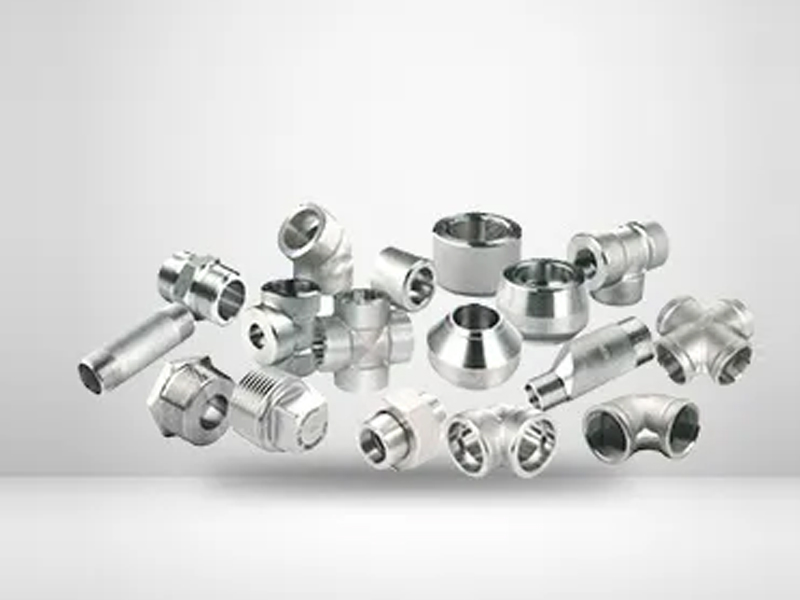
In the demanding world of industrial piping systems, the integrity of every component is paramount. Among the various manufacturing methods available, forging has emerged as the gold standard for producing pipe fittings that must withstand extreme pressures, elevated temperatures, and cyclic loading conditions. The question of how the forging process enhances the strength of forged pipe fittings is fundamentally a question about metallurgical transformation—about how applying controlled mechanical force to a metal billet can fundamentally alter its internal structure and unlock superior mechanical properties. This article provides a comprehensive exploration of the physical and metallurgical mechanisms through which forging imparts exceptional strength to pipe fittings, examining grain refinement, defect elimination, directional grain flow, and microstructural consolidation as the primary drivers of performance enhancement.
The Foundational Principle: Plastic Deformation and Microstructural Transformation
At its core, the forging process is a controlled application of plastic deformation. Unlike casting, which involves pouring molten metal into a mold and allowing it to solidify, or machining, which removes material to achieve a desired shape, forging works the metal while it remains in a solid state, applying immense compressive force to reshape it. This distinction is fundamental to understanding why Forged Fittings possess superior strength characteristics.
When a metal billet is heated to its forging temperature—typically between 1100°C and 1250°C for carbon sTeel—and then subjected to compressive forces, the material undergoes plastic flow. This flow is not merely a change in external geometry; it represents a profound reorganization of the metal's internal architecture. The crystalline structure, which in its initial state consists of coarse, irregular grains, is systematically broken down and reconstituted into a finer, more uniform configuration. This transformation is the foundation upon which all subsequent strength enhancements are built.
The forging process encompasses several distinct techniques, each suited to different applications. Closed-die forging, also known as impression-die forging, uses shaped dies to produce near-net-shape components with tight dimensional tolerances, making it ideal for standardized pipe fittings such as Elbows, tees, and couplings. Open-die forging, by contrast, involves compressing the metal between flat or simple-shaped dies, allowing for greater flexibility in producing large or custom-shaped components. A third technique, seamless rolled ring forging, is specifically dedicated to producing annular components such as Flanges and ring-shaped fittings, creating a tangential grain flow that provides exceptional hoop strength. Each of these methods, while differing in their specific approach, relies on the same fundamental principle: the application of controlled plastic deformation to enhance material properties.
Grain Refinement: Strengthening Through Microstructural Densification
One of the most significant mechanisms through which forging enhances strength is grain refinement. The concept is rooted in a well-established metallurgical principle known as the Hall-Petch relationship, which states that the yield strength of a material increases as the average grain size decreases. This occurs because smaller grains create more grain boundaries, which act as barriers to the movement of dislocations—the microscopic defects that enable plastic deformation. By impeding dislocation motion, these grain boundaries make the material harder to deform, effectively increasing its strength.
In the casting process, metal that solidifies from a molten state naturally develops a dendritic grain structure characterized by large, columnar crystals. These coarse grains provide relatively few boundaries to block dislocation movement, and their size and orientation can vary unpredictably throughout the component. Forging changes this completely. During the forging process, the intense compressive forces physically break down these large, coarse grains, crushing them and forcing them to reform into much smaller, more compact units. The result is a dramatic reduction in grain size, transforming the original cast structure into a refined, equiaxed grain structure that is both finer and more uniform.
Research into multi-directional forging of ultra-high strength stainless steel has demonstrated the remarkable extent of this refinement. With successive forging passes, the original austenite grain size can be reduced by more than an order of magnitude—from over 200 micrometers to just a few micrometers in diameter. This level of refinement translates directly into measurable improvements in mechanical properties, including increased yield strength, enhanced toughness, and greater resistance to crack propagation. The Hall-Petch relationship ensures that every reduction in grain size yields a corresponding increase in strength, making grain refinement one of the most effective and reliable methods for enhancing the performance of forged components.
Elimination of Internal Defects: Healing the Weaknesses of Cast Materials
Beyond grain refinement, the forging process addresses another critical limitation of cast materials: the presence of internal defects. When metal solidifies from a molten state, it is susceptible to the formation of various imperfections that compromise its structural integrity. Porosity—the formation of tiny gas pockets within the solidifying metal—is a common issue, as are shrinkage cavities that form when the metal contracts during cooling. Non-metallic inclusions, such as slag or other impurities, can also become trapped within the cast structure, creating localized zones of weakness.
The forging process acts as a mechanical cleanser, applying extreme pressure that physically collapses these internal cavities and voids. The compressive forces are sufficient to weld shut microscopic gas pockets, eliminating what would otherwise serve as initiation sites for cracks under load. Similarly, shrinkage cavities are squeezed closed, and the material that once surrounded these voids is consolidated into a dense, homogeneous mass.
The treatment of non-metallic inclusions is equally important. In a cast state, these impurities often cluster in large pockets, creating zones of brittleness that can act as fracture initiation points. The mechanical working of the metal during forging breaks these clusters apart and redistributes them evenly throughout the matrix. This uniform distribution prevents any single area from becoming a localized site for failure, significantly improving the material's resistance to crack initiation and propagation.
The result of this defect elimination is a material with dramatically improved structural integrity. The forged fitting is free from the internal discontinuities that plague cast components, meaning that its cross-section is entirely solid and Capable of bearing load without localized stress concentrations. This is why forged fittings consistently outperform their cast counterparts in applications involving high pressure, cyclic loading, or thermal cycling—conditions that would expose and exploit even microscopic internal flaws.
Directional Grain Flow: Engineering Strength Along Stress Paths
Perhaps the most sophisticated mechanism through which forging enhances strength is the creation of directional grain flow. This concept is unique to forging and represents a fundamental advantage over casting or machining. In a cast component, the grain structure is random and non-directional, with no particular orientation relative to the stresses the part will experience during service. In a machined component, the situation is even worse: cutting across the metal's natural grain structure exposes what are known as "end grains," which are particularly susceptible to fatigue crack initiation.
Forging changes this paradigm entirely. During the forging process, the metal flows under compressive force to fill the die cavity, and the grains align themselves along the direction of this flow. The result is a continuous, unbroken grain structure that follows the contours of the finished part. This directional grain flow means that the metal's natural fiber-like structure wraps around corners, follows curves, and aligns precisely with the stress paths that the fitting will encounter during service.
The engineering significance of this alignment cannot be overstated. When a forged fitting is subjected to pressure, the stress is carried along the direction of the grain flow—the very direction in which the material is strongest. This provides directional reinforcement exactly where it is needed most, optimizing the component's load-bearing capacity and resistance to failure. In a tee fitting, for example, the grain flow follows the intersecting branches, providing strength at the critical junction where stresses are highest. In a flange, the grain flow radiates outward from the center, aligning with the hoop stresses created by internal pressure.
This directional grain flow also contributes to exceptional fatigue resistance. Fatigue cracks typically initiate at stress concentrations and propagate along paths of least resistance. In a forged component, the continuous grain structure provides no easy paths for crack propagation. Cracks must cross grain boundaries to advance, and the dense network of refined grain boundaries acts as an effective barrier to crack growth. This is why forged fittings demonstrate fatigue life that is significantly longer than that of cast or fabricated alternatives.
The Role of Post-Forging Heat Treatment
The enhancement of strength through forging does not end with the mechanical working of the metal. Following the forging operation, components typically undergo heat treatment to further optimize their properties. Processes such as normalizing, annealing, quenching, and tempering are employed to relieve the internal stresses that develop during forging and to fine-tune the material's mechanical characteristics.
Normalizing involves heating the forged fitting to a temperature above its critical range and then allowing it to cool in still air. This process refines the grain structure further and ensures uniformity throughout the component. Quenching and tempering, often referred to as hardening and tempering, is used to achieve specific combinations of strength and toughness. The fitting is heated to the austenitizing temperature, rapidly cooled (quenched) in water or oil to form a hard, martensitic structure, and then reheated (tempered) to a lower temperature to reduce brittleness and achieve the desired mechanical properties.
The careful control of heat treatment parameters is essential for optimizing the performance of forged pipe fittings. Excessive heating or rapid cooling can introduce new stresses or cause undesirable phase transformations, while insufficient treatment may leave residual forging stresses that could lead to distortion or premature failure under load. Professional manufacturers employ sophisticated temperature control systems and follow established procedures to ensure that each heat treatment cycle produces consistent, predictable results.
Quantitative Improvements in Mechanical Properties
The cumulative effect of grain refinement, defect elimination, directional grain flow, and optimized heat treatment is a measurable and significant enhancement of mechanical properties. The tensile strength of forged fittings is typically 25% to 30% higher than that of cast equivalents, while fatigue life can be extended by 50% or more. These improvements are not merely theoretical; they translate directly into real-world performance advantages.
The yield strength, which represents the stress at which a material begins to deform plastically, is substantially increased through forging. This means that forged fittings can sustain higher loads without permanent deformation, providing an additional margin of safety in critical applications. The ultimate tensile strength, representing the maximum stress the material can withstand before fracture, follows a similar trend. The elongation and reduction in area, measures of ductility, also improve, indicating that the material can absorb more energy before failure—a critical characteristic for applications involving impact loading or pressure surges.
Impact toughness, measured by tests such as the Charpy V-notch test, is another property that benefits significantly from forging. The refined grain structure and elimination of internal defects mean that forged fittings can absorb more energy under impact loading without fracturing. This is particularly important in low-temperature applications, where many materials become brittle and susceptible to catastrophic failure. Low-temperature carbon steel forgings, such as those conforming to ASTM A350 LF2, are specifically designed to maintain toughness at sub-zero temperatures, demonstrating the versatility of forged materials across a wide temperature range.
Comparison with Alternative Manufacturing Methods
Understanding the strength enhancements provided by forging requires context through comparison with alternative manufacturing methods. Cast pipe fittings, produced by pouring molten metal into molds, inevitably contain porosity, shrinkage cavities, and non-uniform grain structures that limit their mechanical performance. While casting offers advantages in producing complex shapes and large diameters at lower cost, the resulting components lack the structural integrity necessary for high-pressure or safety-critical service.
Fabricated fittings, created by welding together pieces of pipe or plate, introduce another set of weaknesses. The weld seams themselves are stress concentrators and potential sites for fatigue crack initiation, and the heat-affected zone adjacent to the weld may have altered mechanical properties that differ from the base metal. In cyclic loading conditions, these weld seams become the most vulnerable points in the system, and failure often initiates at these locations.
Machined fittings, produced by cutting the desired shape from bar stock or plate, avoid the porosity issues of casting but introduce a different problem: the cutting process severs the metal's natural grain structure, creating end grains that are exposed at the surface. These end grains are susceptible to fatigue crack initiation, particularly in threaded connections where stress concentrations are already present. Additionally, machining does nothing to enhance the material's microstructure; the properties of the finished component are essentially those of the raw stock from which it was cut.
Forging addresses all of these limitations. The elimination of porosity and internal defects, the refinement and alignment of grain structure, and the optimization of mechanical properties through heat treatment combine to produce components that consistently outperform those manufactured by alternative methods. This is why forged fittings are the preferred choice for applications where failure is not an option—in petrochemical plants, power generation facilities, offshore platforms, and other critical infrastructure.
The forging process enhances the strength of pipe fittings through a sophisticated combination of metallurgical mechanisms that transform the internal structure of the metal. Grain refinement, governed by the Hall-Petch relationship, creates a dense network of grain boundaries that impede dislocation movement and increase yield strength. The elimination of internal defects, including porosity, shrinkage cavities, and inclusion clusters, removes the weak points that would otherwise serve as crack initiation sites. Directional grain flow aligns the metal's natural fiber structure with the stress paths the component will encounter during service, providing optimized load-bearing capacity and exceptional fatigue resistance. Post-forging heat treatment further refines these properties, relieving residual stresses and achieving the desired balance of strength and toughness.
The result of these combined mechanisms is a pipe fitting with superior mechanical properties that cannot be replicated through casting, fabrication, or machining alone. With tensile strength increased by 25-30% and fatigue life extended by 50% or more compared to cast alternatives, forged fittings represent the highest standard of reliability in industrial piping systems. As industrial processes continue to push toward higher pressures, higher temperatures, and more demanding service conditions, the fundamental principles of forging—the controlled application of plastic deformation to enhance material properties—will remain as relevant as ever, ensuring that forged fittings continue to serve as the backbone of critical infrastructure worldwide.
Largest manufacturing base for pipe fittings
A World Leading Pipe Fittings Manutacturer
Meeting and exceeding all your expectations

Address: No. 99, Baoying Street,Baoying County, Jiangsu Province, China
Tel: 0086-514-88290587 / 88989086
Mobile : 0086-18932365939
Contact Person:Tony Xu
E-mail: xqh@yz-huayu.com
Products
Butt-welded Fittings Forged Fittings Flanges PipesAbout
Company Profile Plant Area OverviewNews
Company News Industrial NewsContact
Contacts Online MessageKeep In Touch

© 2025 Yangzhou Huayu Pipe Fitting Co.,Ltd. All rights reserved | Powered by Yicheng Network | sitemap
This website uses cookies to ensure you get the best experience on our website.



 Phone
Comment
(0)